
There are many excellent reasons why businesses should add blogging to their marketing mix. But in the end, what you really want from any marketing channel is leads, right?
Now we’re going to caveat this post by saying something really important: content marketing is about the long game. If you try it out for a month and compare it to, say, paid advertising, that’s a bit of an unfair match.
However, just because blogging leans slightly more towards the brand building side of marketing than the pure growth marketing side, that doesn’t mean it can’t generate leads. If you’re strategic about it.
So here are five strategies to get your blog delivering more leads into your pipeline.
TL:DR
- Pick that low-hanging fruit
- Keep the not-ready-yet audience on your radar
- Create buyer journey blog chains
- Combine your blogging efforts with other channels
- Serve the robots, as well as the humans
- How to build lead generation into your blogging strategy
1. Pick that low-hanging fruit
There are a bunch of people out there who want to buy your products, use your services, donate to your cause or in some other way do the thing you want them to do. They just need help to get across the finish line.
Imagine, for example, that you’re the CMO of a rapidly scaling SaaS company. Your platform offers a way to shortcut a key process for your customer – but your competitor is saying the same thing.
That’s where a ‘How we…’ post comes in handy. By giving your audience a glimpse behind the curtain – showing them how your expertise works rather than simply telling them you have it – you earn a greater degree of trust. Trust that makes spending money with you that much easier.
And that’s just one example of a sales-led blog post. You could also write a post that breaks down your approach to pricing and showcases where the value lies for your audience compared to other options on the market. Or you could answer a key objection, like we have in ‘How can you blog for my business if you’re not an expert in my subject?’
Sales-driven blog content isn’t about the hard sell. It’s about facilitating great decision making. By the end of a great sales post, you can legitimately suggest that your reader gets in touch, books a demo or even taps ‘buy now’, because you’ve helped them see why that’s the right choice for them.
“Creating chains of interlinked blog content like this is a great way to guide your potential customer or client along the buyer journey until they become a lead. It also helps the reader to hop off the trail if they’re not a good fit for you.”
2. Keep the not-ready-yet audience on your radar
No matter what you’re offering and no matter who you’re offering it to, there’s no way that everyone in your target audience will be ready to buy at the exact moment they read your blog. This is particularly true in B2B marketing where studies show that 95% of your audience is out-of-market.
Your reader might not have the budget right now. Or they might have just bought something similar. Perhaps they need internal sign off, or they just want to think about it a bit more.
But if your blog has engaged them sufficiently, you can capitalise on your success by prompting them to do something.
You might ask them to follow you on social media, for example, or sign up for your newsletter so that you can continue to deliver useful content into their inbox. Or you could sweeten the deal with a lead magnet and create a nurture series to help move the process forward.
This might not be as immediately exciting to you as getting a reader to call your sales team, but by creating a way to stay in touch, you can continue to market to them until they are ready.
Whatever the case, don’t rely on the reader’s initiative. When they’re ready to buy, they probably won’t find their way back to your brand just because they read your blog a year ago. So create a tentative connection now that you can build on later.
3. Create buyer journey blog chains
Imagine your reader is at the very beginning of their buyer journey. They’re in the dark, not knowing they have a problem or, if they do, they’re only vaguely aware of the full extent of that problem or what’s causing it. You can change that. This is where you create content that helps them to explore the problem, validates what they’re feeling and shows them what the real issue is.
They won’t be ready to buy after reading. But they will be able to learn about the various solutions that can tackle their newly defined problem. After which they might be interested in exploring one solution in particular. And once they’ve reached that point, they might want to know the details of what you offer, including your process and pricing.
Creating chains of interlinked blog content like this is a great way to guide your potential customer or client along the buyer journey until they become a lead. It also helps the reader to hop off the trail if they’re not a good fit for you.
In a blog chain, you’ll adjust your CTA as your reader progresses. The earlier posts encourage further reading, lead magnet downloads or newsletter signups, and the later posts can get more sales-led.

4. Combine your blogging efforts with other channels
Good blog content is foundational. It shouldn’t sit on your website in isolation, with the vague hope that people will stumble across it. It needs to work with the other channels you’re investing in – and even feed those channels content.
The best way to get your blog generating leads is to ensure as many people as possible see it. And that means sitting it within a much wider strategy that includes, for example, social media, SEO, paid advertising, PR and so on.
If you’re using more than one marketing partner, make sure there’s enough communication between them. There’s no point having your PR or SEO agency going off in one direction and your blogging agency heading off in another.
Get your sales team involved too so that they make the most of the content you’re producing. It’s far nicer for a prospect to be sent a helpful blog post than to be hassled with a vague and ineffective, “Just wondering whether you need any help with X…”
5. Serve the robots, as well as the humans
If your sales machine relies on a high volume of input then one of the best and cheapest ways to generate the leads you need from your blog is to combine it with a well thought out organic search strategy.
This does not mean that you pick a few low cost, low competition keywords and stuff them willy nilly into a badly thought out post written by a barely literate stranger you found on Fivr. Not unless you’re happy to sacrifice your long term brand image for an initial flurry of visitors that offer nothing more than vanity metrics.
Google and co are likely to become increasingly human in their approach to judging the value of blog content over time, whereas people are unlikely to become more machine-like. So your flesh-and-blood audience still needs to be your first priority.
But there’s no reason why you can’t serve both robot and human. This is how we helped our client Addland generate 150,000 impressions and 7,000 clicks to their website within the first six months after they launched their land buying platform. It’s also why Blueheart’s internal content creator said our approach to SEO optimisation is so hidden that their posts “just feel like solid, well-researched, empathetically-written articles.”
How to build lead generation into your blogging strategy
As with any marketing channel, blogging needs to be a strategic activity with a clear plan that is outlined at the start and checked on regularly. That plan needs to be based on the needs of your audience, it needs to sit within a wider marketing strategy and it needs to have clear goals from the outset.
You’ll need to set your expectations properly too, giving the blog at least 9 months and more likely 12 or even 18 months to deliver regular and reliable leads, especially if you’ve got a long sales cycle.
Blogging isn’t a lead gen silver bullet. In fact we’d argue that there is no such thing. But with the right strategy and a great team to deliver the best quality content, blogging can absolutely generate leads effectively and consistently for any business.
Want to talk lead gen with the blogging experts at RH&Co? Get in touch today.
Every marketer has their favourite way of describing the stages of the buyer journey. Some stick with E St Elmo Lewis’s original AIDA model: Attention, Interest, Desire, Action. Others simplify it to Awareness, Consideration and Decision. Still others prefer an ‘awareness journey’: problem aware, solution aware, most aware and so on.
All are helpful to a degree, especially when planning your broader marketing strategy and channel mix. But if you try to apply them to generating topic ideas for your content marketing plan they’re not always so effective.
That’s why at RH&Co we’ve developed our own framework, based on the process we use to create editorial calendars for our clients. In this post, we’re looking at the five key stages your customer or client is likely to go through and the type of content you should be aiming to create at each one.
TL:DR
- Stage 01: In the dark
- Stage 02: Stuck
- Stage 03: Searching
- Stage 04: Almost ready
- Stage 05: Onboarding
- Bonus: reputation-building content for any stage
- How to use the RH&Co content framework
Stage 01: In the dark
In stage one, your reader is either not aware of their problem or not clear on their real problem.
For example, they might not realise that their app’s security is at risk because they haven’t got a maintenance schedule in place. Or they might know that they’re having stomach problems but not realise they have a wheat intolerance.
Goal
At this stage your goal needs to be to educate your audience and raise their awareness, identifying and exploring the problem until they’re really clear on what it is.
This audience type is right at the beginning of their journey, so this is not the time to rush them towards a sale. Instead, get them to the point where they feel confident about researching solutions.
Content
You could start with a piece of content about the wider issues facing your reader’s industry or share your opinion on why a particular problem is worth addressing.
You could also highlight the warning signs that might indicate a certain problem is looming or challenge them to think about an issue in a new way.
Stage 02: Stuck
Now your audience is clear that there’s a problem – but they have no idea what to do about it.
In the example above, your reader may be panicking about the security risk facing their new app or feeling relieved that their stomach pain has a genuine source. But how do you improve app security or deal with wheat intolerance?
Goal
The goal in this stage should be to add real value, introducing the variety of solutions that are available. It’s important not to focus too heavily on your own solution just yet – sell now and you’ll look self interested rather than genuinely helpful.
Your reader wants the facts laid out for them so that they can make an independent, informed decision about what’s right for them, without feeling pressured.
Content
This is where ‘how to’ content comes into its own. You can keep this content fairly broad, or start to narrow it down a little – although keep some ideas back for the next stage (you’ll see what we mean in a moment).
It’s also helpful to dig beneath the problems your reader is facing and help them understand why they’re having them. After all, it’s hard to fix something if you don’t know what’s causing it. And as humans, we’re naturally curious too.
Stage 03: Searching
Searching is like part two of Stuck. Now the reader is relatively clear on their problem and knows solutions exist. So the next step is for them to work out which of those solutions is best for them.
Is it getting a consultant in, training the in-house team or hiring a new specialist to ensure your app stays on top form? Does it mean cutting out wheat, taking a probiotic supplement or trying reiki?
Goal
This is where you start to explore each solution in depth, giving more facts such as advantages and disadvantages of each, and some idea of how to begin making the right choice.
Again, it’s really important to be honest rather than try to skew the reader towards your own offering. That only leads to unhappy clients and customers. If you’re a poor fit for each other, it’s best get them out of the funnel now so you can concentrate on the better fits.
Content
As we mentioned in the Stuck stage, you can use ‘how to’ content here as well. Only this time it will be more niche, focusing less on ‘how to reduce bloating’, for example, and more on ‘how to choose the right probiotic for wheat intolerance’.
You can also hone your angle to focus specifically on factors that will affect your reader’s choice, such as price, as well as comparing different options like for like.
Stage 04: Almost ready
By now your reader has not only settled on a solution but they’re considering your business – possibly alongside others – in order to make the very best choice.
The non-technical founder who didn’t realise that they had a security risk is now convinced that they do, and that they need a consultant – why should they choose you? Your wheat intolerant buyer is set on taking a probiotic every day but do they get your brand or a cheaper competitor option?
Goal
This is where you provide the granular details that allow your reader to make their decision to spend money with you – or at the very least to get in touch to talk to your sales team.
The emotion we want to stimulate now is certainty, and that is best done with facts rather than hype. Although the marketer’s missive is usually ‘benefits over features’, you need to dig into features here.
Content
Content for the ‘almost ready’ stage needs to contain plenty of detail – prices, processes and anything else your reader might want to know about you.
Here you can create objection busting content to support your sales team with the questions and challenges they face most often, and even try to put off anyone who is a poor fit by writing about why they shouldn’t buy your product or use your service.
Stage 05: Onboarding
So far we’ve used marketing within a marketing context and as a support for the sales process. Your reader has made a commitment to buy from you or use your services – but you’re not done yet.
Now we need to look at how content can support the onboarding process so that your customer or client is happy and more likely to stay or buy again.
Goal
The goal of onboarding content is to tackle ‘buyer’s remorse’, which can happen after you’ve made a purchase decision. That’s where your new customer or client thinks, “Was this really the right decision?” or “Did I get the best deal?” or even simply “Do I really need this?”
Instead, you want them to feel happy with their decision, not just about the product or service but you as a brand. You want them to feel as taken care of now they’re doing business with you as when you were courting them.
Content
Onboarding content will either make a new customer or client’s experience easier or enhance it in some way.
Going back to our original examples, the firm who has employed a consultancy to address their cyber security concerns might appreciate a guide to how to prepare for their first discovery session. The person looking to take probiotics as a way to support their gut health might also appreciate gut-friendly recipes or a four week meal plan.
Bonus: reputation-building content for any stage
Of course, there is some content that doesn’t quite fit neatly into any of these stages but is very much worth including because it can be enormously effective.
We call this reputation-building content and it can engage people wherever they are on their journey or even if they’re not in the market for what you’re selling at all.
Goal
As the name suggests, reputation-building content is all about establishing your brand’s reputation, for example as a thought leader, innovator or expert voice.
By doing this, you create a secure brand position that will pay dividends when people do begin their buyer journey, and you’ll also build connections within your industry and with the wider public.
Content
This is the most difficult type of content for your competitors to copy because it is based on your unique IP, experience or perspective as a business.
It can include opinions and angles on current topics, use case studies to demonstrate real life examples, and give glimpses behind the scenes into your culture, values and ways of working.
How to use the RH&Co content framework
In an ideal world, you would fill every stage of your content framework with well researched, highly valuable and engaging copy – preferably with a strand for each separate product or service you offer, or each industry vertical or client persona group you serve.
The reality is that you’ll need to start somewhere, so think about your main challenges and the quick wins you want to gain.
Perhaps your sales team needs a boost with bottom of funnel ‘almost ready’ content. Or maybe you’re working with an SEO strategist and want to catch people’s attention while they’re (quite literally) in the searching phase.
If you’re an expert-led business – in other words, your goal is to position your brand as an authority in a given subject area – then you need to start working on that reputation-building content.
We’ll be writing more about how to put our framework into practice in due course but in the meantime, if you’d like to talk about getting our support to create your content strategy, get in touch.
There are numerous occasions in business where persuasion is needed, the most obvious of which is in the marketing and sales process. Persuasive writing is therefore an essential skill for marketers and salespeople. But it can be a tricky thing to get right. And getting it wrong can be damaging to your brand.
Luckily, persuasive writing is something that can be learned – in fact, it’s something we offer training in. Here’s a starting point with techniques, tips and real life examples that showcase how it can be done to great effect.
First things first: what persuasive writing isn’t
We need to start by making one point really clear. Persuasion is not the same as manipulation or coercion. This isn’t about tricking people into believing something that isn’t true or forcing them to do something they don’t want to do.
In marketing and sales, your goal should always be to help your customer or client make the best decision for them. This article assumes that you’re a good fit for your audience – you just need to get their attention and help them to understand why so they can, ultimately, act on it.
If we’re all agreed on that, it’s time to look at how.
Persuasion is about people and psychology
Whether you’re trying to persuade a child to tidy up their room or a procurement lead to add you to a preferred supplier list, persuasion is all about psychology. Which is why it’s essential to start by learning about the people you’re trying to persuade.
What motivates them? What are they struggling with? What are their goals? What are their constraints? If you don’t get these basics right, you can craft the most articulate argument in the world and it’s going to fall on deaf ears.
Offer a better version of the future
Once you know what your audience is struggling with or aiming for, you can begin to shape your persuasive argument to address this.
For example, let’s say you have a new HR tech product that makes the staff review process simpler and more efficient. Rather than jumping straight on the various impressive features your product has, paint a picture for your end user.
Help them to imagine what it would be like to spend less time doing face to face reviews. Or to have a happier and more effective team. Ultimately, you want to be able to answer the question “What’s in it for me?”
Persuasion is about stimulating the right emotion
Understanding what a better version of the future looks like for your customer or client is a really useful starting point. Now you have to communicate that message to your audience using words that will engage them, and one of the most effective ways of doing this is to use emotion.
In his book, Persuasive Copywriting, Andy Maslen talks about three main categories of emotion we can use to persuade people.
- Primary or universal emotions such as surprise, fear, happiness and sadness
- Secondary or social emotions such as pride, envy or curiosity
- Tertiary or background emotions such as excitement, calm and tension
Have a look at any given website, advert, flyer or other piece of copy designed to persuade, and you should be able to work out what emotion the copywriter was trying to illicit when they wrote the copy.
Here are a few examples of using emotion as a persuasive technique in website copy we’ve written for our clients:
Petals at Bibendum | pride
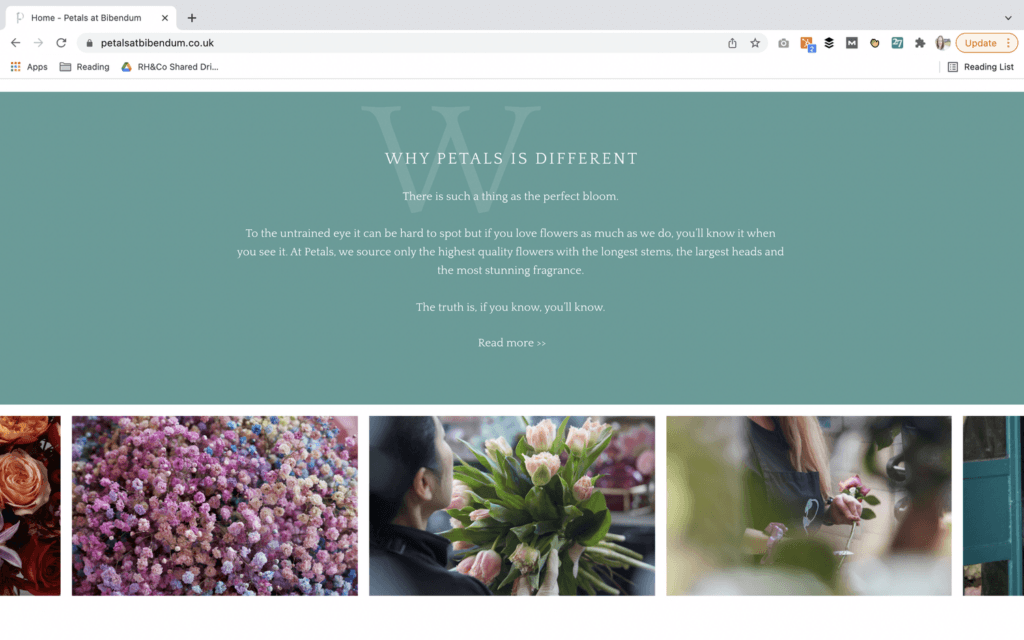
This copy we wrote for Petals at Bibendum is designed to appeal to high end customers who have the budget and desire to spend several hundred pounds on flowers without thinking too much about it. The words create a sense that there is an exclusive club and subtly asks whether they belong to that club. In doing so, it appeals to the sense of pride that this audience group would no doubt have about their good taste.
AppLaunch | calm
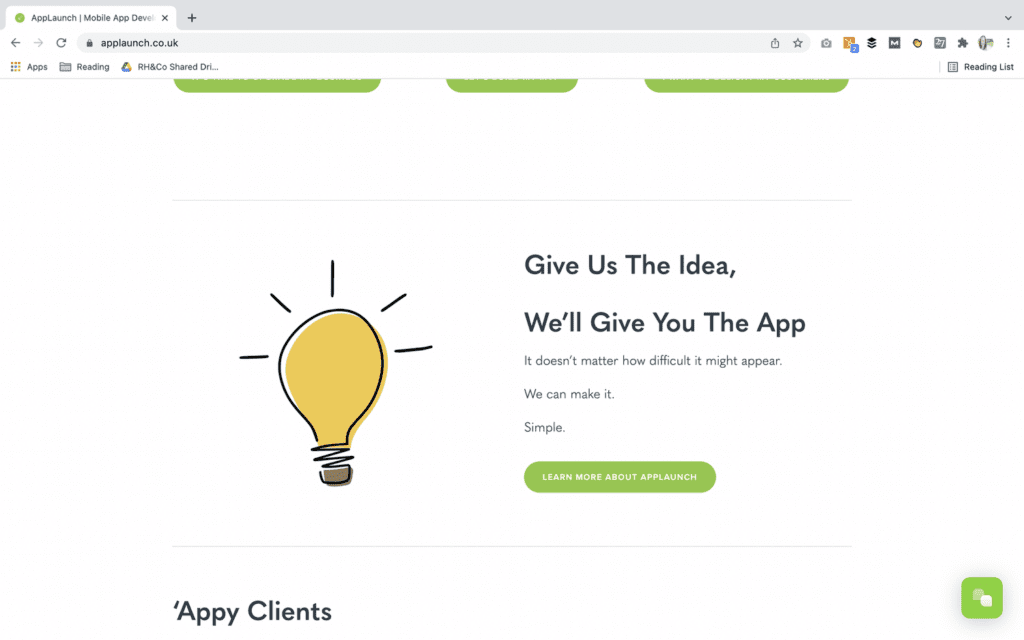
Developing an app might feel like a stressful, complicated process. The team at AppLaunch wanted to reassure their clients that it didn’t have to be that way. This section of copy encapsulates the simplicity of the process and is designed to create a feeling of calm in the reader, causing them to breathe a sigh of relief.
Stylemongers of Bristol | curiosity
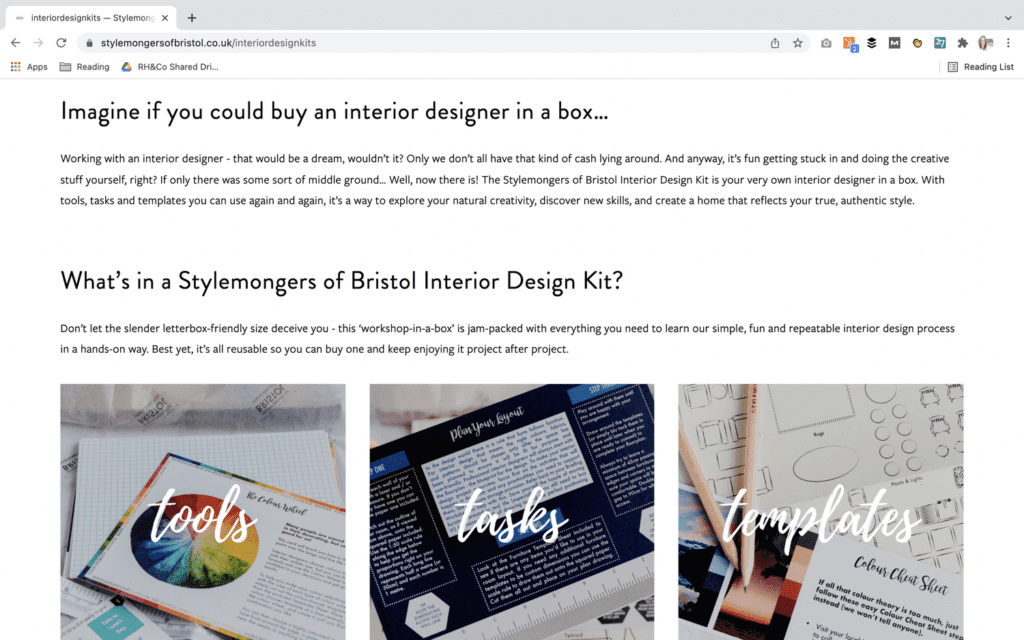
Curiosity has got a bad reputation thanks to clickbait headlines that try to hack it in a manipulative way. But appealing to curiosity can be both authentic and very effective, as shown on this sales page we wrote for Stylemongers of Bristol.
Rather than jumping straight into an explanation of what the box contains and why it’s so valuable, the words we use stimulate the reader to use their imagination. Only then do we go into what’s actually in the kit.
Show, don’t tell
If we’d just described the Stylemongers of Bristol kit as a ‘designer in a box’ without adding more detail, the reader would have been left thinking, “Yes, but what actually is it?”
People make decisions with hearts and minds, so once you’ve used emotion to get their attention, make sure you offer something more substantial too.
And be sure you can prove it. Showing is a far more effective way of persuading someone than telling.
So don’t tell me you’re ‘passionate’ about using local produce at your restaurant – show me what percentage of your ingredients are sourced within a 20 mile radius. Don’t tell me your team building exercises improves staff morale – show me a customer testimonial to prove it or a reputable study that backs your techniques.
Other persuasive writing techniques
We’ve already talked about how emotion is a powerful persuasive technique. Here are a few others to try.
Storytelling
Human beings have always loved stories and they can be used in a number of ways in a persuasive context. For example, case studies are a great way of using client success stories to help persuade your audience by providing social proof. And charities often use stories to persuade people to donate by showcasing real life people who have benefitted from their work.
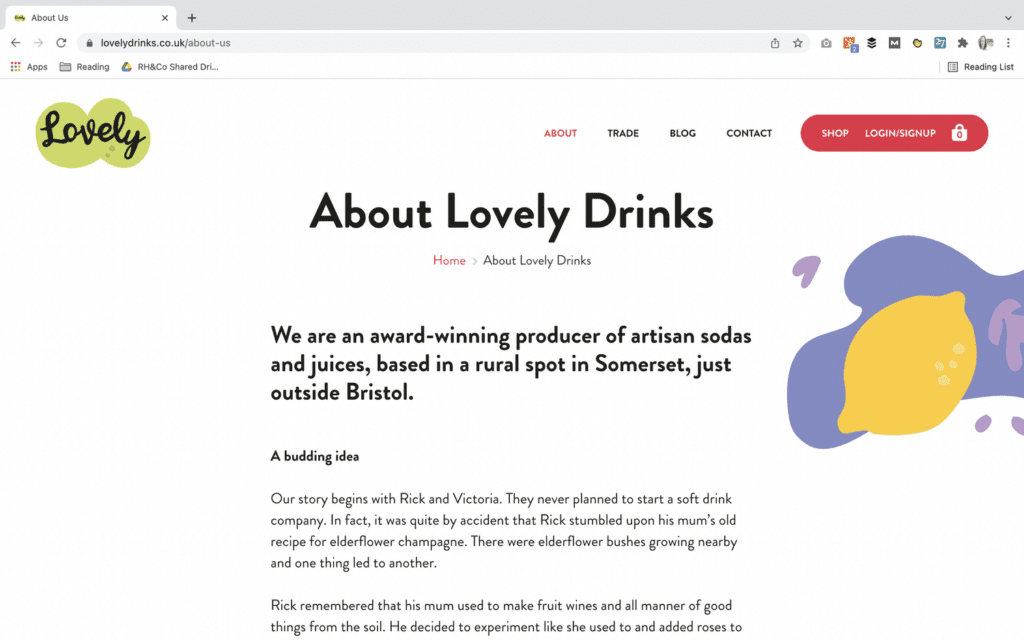
Your brand story might also be important. You’d think that people would choose a soft drink based on how it tastes, for example. But we know that for Lovely Drinks, their homemade, Somerset roots are integral to their brand and why people choose them, which is why we highlighted this in their website copy.
The power of three
There’s something about trios that just work, so long as you don’t overuse them. Whether it’s three words or three sentences, now you know that this is a persuasive writing technique, you’ll start noticing it everywhere. It’s popular in speech writing in particular. And remember ‘Hands, Face, Space’?
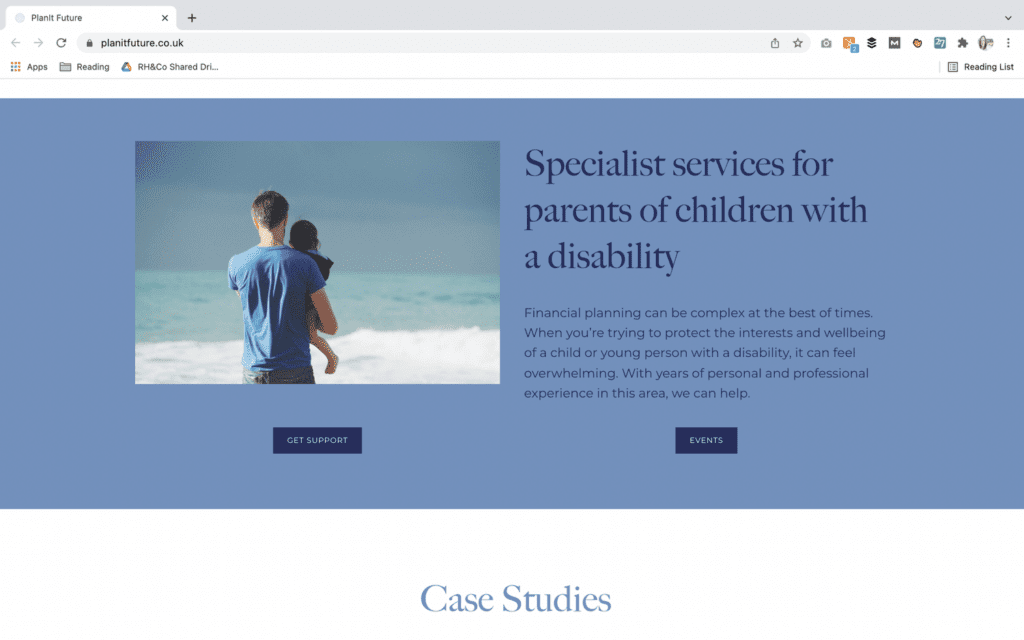
We used the power of three on the PlanIt Future website below to build emotion. The first sentence lays out a challenge creating tension. The second builds on it, escalating the tension. Then the third comes in and provides a solution, creating a sense of relief.
Personalised pronouns
Using personalised pronouns like ‘we’ and ‘you’ establishes a more personalised relationship with your audience. And relationship is essential for persuasion, as we’ll come onto in a moment.
We played on this persuasive technique when we wrote the Engineered Arts website. The line “Humans, check this out” as well as the personalised pronouns further enhanced the sense of conversation between brand and reader.

Imagine how different this paragraph would have felt if we’d written, “Engineered Arts has found a way to create robots that mimic people.”
Imperative sentences
An imperative sentence doesn’t have a subject. Instead it begins with a verb. Imperative sentences are also known as command sentences, and they are ideal for persuading people to act. This is why calls to action (CTAs) are usually imperative sentences.
Here’s a good example from Garrett Creative where we used a double CTA, both using imperative sentences, to create options for visitors at different stages of their customer journey.

Building relationships – the importance of timing
Last but not least, persuasion isn’t just about what words you use. It’s also about when you use them. Because if you go in too hard, too early, you’re going to come across like a pushy car salesman.
The most effective persuasion comes from a foundation of relationship. We’re not enormous fans of Gary V’s ‘Jab, jab, jab, right hook’ analogy as we’d rather not paint marketing and sales as a violent sport! But the principle is sound. It’s all about adding value for your audience and earning your right to ask for what you want.
You also need to know where your customer is on their journey. If they’re only just figuring out that they have a problem, don’t jump straight in and try to shove your solution down their throat.
Help them explore the problem and understand it fully, perhaps with a blog post, video or webinar. Showcase the broad types of solution available and the advantages and disadvantages of each. Maybe now they’re ready to give you their email in return for a useful download.
The more complex, important or expensive a buy decision is, the longer it’s likely to take. Which means you might need to adjust your perception of persuasion as a ‘get them over the line’ approach.
Persuasive writing can have an instant effect, of course – we’ve all bought something on a whim because we were hooked by a clever advert from a brand we’ve never heard of. The important thing is to understand where that’s possible and plan for the times when it isn’t.
If you know your audience and what they’re looking for, if you speak to both their heart and their head, and if you let them come to you in their time, you’ll have far more success than if you resort to being pushy.
Whatever copywriting project you’re embarking on – whether it’s website copy, a chunky white paper or a series of expert led blog posts – there will come a point when you need give your copywriter feedback.
You might think that in a perfect world you’d be happy with each and every word they presents in their first draft, but the reality is that the chances of this are practically zero – especially if you’re at the beginning of your working relationship. It may be the copy needs just a few tweaks that are easy enough to make, or there might be broader issues around messaging, structure or tone that you’re not 100% happy with.
So how do you give feedback in a way that will ensure that your second draft copy is that much closer to what you’re looking for? Here’s what we’ve learned over the years, from a writer’s perspective.
TL:DR
- Remember that we’re not taking it personally
- Does it meet the brief?
- Be realistic about what’s possible
- Feeding back on messaging, structure and tone
- Broad vs detailed feedback and how to deliver it
- The practicalities – tracked changes and comments
- Signing off your copy
Remember that we’re not taking it personally
This is a really important point to start with. A lot of people find giving feedback uncomfortable, as it feels like they’re being critical and that doesn’t come naturally to a lot of people. But as copywriters we expect to get guidance from our clients in terms of what’s working for them and what isn’t.
After all, writing is as much an art as a science. There’s an element of subjectivity, and what works for one person won’t always work for another. Our perceptions of what constitutes “formal” or “humorous” or “disruptive” might be different from yours.
So try to take the emotion out of it and simply be as clear as possible about what you do and don’t like so that the next draft is better. That said, positive framing is always nicer to receive than blunt negativity! Try “need something less technical here” instead of “this is way too complicated”.
“From the outset, it’s important to be realistic about what your copywriter will be able to achieve with the tools they’ve been given.”
Does it meet the brief?
Having said that you should be clear about what you do and don’t like, the main thing to consider is how well the copy meets the brief. After all, you’re not the target reader and part of why you’ve hired a copywriter or copywriting agency is to bring an outside perspective.
For example, you may have asked for a technically complex piece that still needs to be accessible to a non-technical audience. In which case, don’t be surprised if the copy is simplified and not as nuanced as you – the expert – understand it to be.
Of course, creating a good, detailed brief is part of what your copywriter or agency should be able to help you with. Ideally, work on it collaboratively and sign it off before any writing work starts so everyone is on the same page as to what good should look like.
Be realistic about what’s possible
From the outset, it’s important to be realistic about what your copywriter will be able to achieve with the tools they’ve been given.
Imagine, for example, you’re the marketing manager and your company’s subject matter expert isn’t available to come to the briefing and input their insights. Naturally your copywriter is going to have a hard time creating a unique piece of thought leadership content.
The same is true if you haven’t yet clarified your thoughts about the value proposition of your product or service. Your copywriter is going to struggle to articulate them in your first draft copy without first doing some messaging work with you.
Feeding back on messaging, structure and tone
There are three overarching elements that you can consider as you put together your feedback notes or prepare for a feedback session. By understanding the differences, you can be that bit more accurate about which elements you need your copywriter to work on.
First, messaging. If you had to summarise the point of your blog post in a few words, what would it be? What’s the key takeaway you want people to get from your website copy? If these aren’t correct, then nothing else will be so it’s important to get them right – ideally before the writing even starts.
Structure is about how the key elements of your copy are laid out. This might be the order that you tackle your main points in a blog post, the way you segment your services on your website home page, or simply how copy-heavy different elements of your white paper are.
Finally, tone is about the actual words used and the impression they give about the brand’s personality, levels of formality and so on. It’s whether you’re asking people to ‘check out our sizzling deals’ or ‘take a look at our exclusive offers’, for example.
Broad vs detailed feedback and how to deliver it
There are two general types of feedback. Broad feedback might be your overarching thought about, for example, the angle of your blog post not quite being right. Perhaps the copywriter has taken one point that you made in the briefing and built too heavily on it, skewing the overall feel of the piece.
In this case, a conversation might be the easiest way to give your amends. It’ll mean they can ask more probing questions to get to the bottom of why the first draft isn’t quite working.
But sometimes broad feedback isn’t helpful. If you think the tone is “too formal”, for example, it’s helpful to highlight words and phrases in the copy that demonstrate this, making notes in the document. As we’ve said, your understanding of what formal looks like might be different to your copywriter’s.
The practicalities – tracked changes and comments
When it comes to adding feedback into a first draft copy document, there are two different options, which we’d suggest using together. This applies for any text based document, whether you’re using Google Docs (as we do) or Word or something else.
The first is the comments function. This allows you to highlight a sentence or paragraph and say something like “too wordy” or “can we give an example here?” without having to do any rewriting. Remember that you’re paying your copywriter for a reason, so don’t do more work than you have to.
If you do want to tweak any wording yourself, use the ‘tracked changes’ function – in Google Docs this would be editing in ‘suggestion mode’. This gives your copywriter a chance to check the changes for errors and will also help them learn about your preferred style. This is particularly important if you’re building an ongoing relationship.
And if you are entering into a longer term relationship with a copywriter or copywriting agency, then highlighting what you like – as well as what you don’t – is very useful too.
Signing off your copy
Most copywriters and copywriting agencies will build in a couple of amends stages into each project as standard, depending on the size, complexity and importance of a project. By being as clear and as detailed as you can in the first round of amends, you should find that by the second round you’re down to much more minor tweaks.
If your copy is being designed in some way – for example, if you’ve commissioned a website or brochure – you might want to ask your copywriter to give the content a final once over at the design proof stage. This allows them to catch any errors that might have crept in and potentially help you adjust the length of the copy to fit the design, if that’s needed.
Once you’re completely satisfied with your copy, it’s time to sign it off officially. After this point, if you need any further changes, this will generally be seen as an additional job.
If you’re happy with how your project has gone, don’t forget to tell your copywriter or agency. It’s always nice to get positive feedback! But more importantly, they should be making notes about all the feedback they’ve received so that next time you need some support, they’ll be ready to go. The first draft of your future projects should need far less in the way of amends than the original copy did.
If you say you’re good at what you do, people might be a little sceptical. If someone who has used your business says you’re good at what you do (i.e. gives you a testimonial), that’s more convincing. And if you set that endorsement within a wider context that lays out what exactly was achieved (i.e. a case study), you’re onto a real winner.
We all know that storytelling is a powerful way to engage people. The human race has been using stories – to entertain, to teach, to persuade – since the dawn of time. Good stories use the ‘show, don’t tell’ method of communication to bypass our conscious mind and tap into something much more primitive.
That’s why case studies are so effective. Or rather, why they can be so effective – if they’re done well. This is a guide for business owners and marketers who want to create genuinely effective case studies that get results.
TL:DR
- How to pick the right subject for your case study
- Transformation and benefits – the absolute essentials
- Taking it to the next level
- How to interview a client for a case study
- How to make your case studies more engaging
- How to get more eyes on your case studies
- Effective case studies – a conclusion
How to pick the right subject for your case study
Naturally when it comes to choosing the right subject for a case study, you want an example where you can show that you delivered excellent results. You’ll also need to make sure that the customer or client in question is happy to put their name to it and, ideally, get actively involved (more on that later).
Beyond this, the main thing to think about is whether the example you’re considering is a good reflection of your ideal customer, client or project. The point of a case study is to attract more of the same sort of work, so if a job wasn’t all that profitable, for example, then don’t feature it, even if the results were good.
The best case studies are the ones that highlight a particular benefit you want to promote, which are in a sector you’re planning to pursue, or have some other feature that makes them a beacon for the kinds of work that you most want to do.
Transformation and benefits – the absolute essentials
The most important element of a case study is the transformation. You want to start out by showing the reader the situation your customer or client was in when they first engaged with your business.
Ideally, this will be a problem that they recognise themselves. Something that makes them think, “Yes, this is exactly what I’m struggling with!” Something that will compel them to keep reading because they want to know what the solution is.
Then, you want to finish with the positive difference that working with you or using your product had on their lives. That contrast – the transformation – is the foundation that every case study should be built on.
Just be sure that you’re not limiting your transformation to the practicalities. We need to go beyond features here, and focus on benefits.
For example, if you designed a new piece of software that achieves a key admin task in half the time of the manual process, that’s great. But make sure that you also talk about how customer experience has improved thanks to the faster service, and employees are happier now that they’re not spending half their day doing tedious admin tasks.
“ You can create the most powerful and well written case study in the world but if it isn’t easy to read, most people are going to give up after a couple of lines.”
Taking it to the next level
Now that you’ve got the foundations in place, you want to start building up layers of evidence that support your case study.
Hard facts
Any empirical facts that you can include will add weight to your assertions. In the example above, don’t just talk about customer experience improving – tell the reader that the client’s average Trustpilot score has increased from 4.2 to 4.8. Or that their staff turnover is down 15% on the previous year.
Direct quotes
Direct quotes are another useful way to back up your assertions, especially if your case study doesn’t naturally lend itself to tangible numbers.
In one of our case studies, our client Vaq Hussain, marketing manager at Actual Experience, said, “I would say Rin Hamburgh & Co’s strengths are not just in their writing. Rin and her team are excellent listeners. Finding the important details in what we were telling them, understanding the relevance to our audience and converting it to a usable content piece is what impressed me the most.”
If we say we’re good listeners, there’s no reason for you to believe us. If someone else says it, it’s far more convincing.
Other formats
You can also build on your case study by using a range of formats. If your customer or client is willing to give you quotes to include, why not ask them to record a video so you have a visual testimonial to share?
Or if you have lots of great facts and figures, turn them into infographics. These are easy to share, quick to process and perfect for a time-poor audience that wants to engage quickly with your content.
How to interview a client for a case study
If you want to use first person quotes for your case study, you’ll need to think about how to get the information you want from them. Simply asking them to write a few lines or paragraphs about their experience with you is going to get mixed results at best.
At the very least, make sure to email over a list of questions that encourages them to explore the aspects you want to focus on. For example, ask them to describe the problem that they were facing when they came to you, so you have the base for your transformation story.
If you particularly want to highlight an aspect of your product or service, make sure one of the questions leads to that. Perhaps you know that your machinery operates much more quietly than most. Be sure to ask, “How has using X impacted on noise levels at your site?”
The best scenario, however, is to actually ask your questions live. That way you can use follow up questions to explore interesting lines that emerge as you talk. Often the best and most useful nuggets of information come from pursuing what was originally a throwaway comment.
If it doesn’t feel natural to conduct an interview like this in-house – and it’s true that it can be a bit awkward to ask people to say nice things about you to your face – you can use a freelance marketer or agency such as RH&Co to do it for you.
How to make your case studies more engaging
You can create the most powerful and well written case study in the world but if it isn’t easy to read, most people are going to give up after a couple of lines. Structuring an engaging case study is very much like structuring an engaging blog post.
Subheads
Use subhead to stop the ‘scary wall of text’ effect, which is a sure fire way to put off a busy reader. Subheads can be functional, clearly showcasing what each section contains e.g. The Challenge, The Solution, The Result. Or they can be more conceptual, drawing out elements of the story.
Images
Another way to break up solid text is by using images. Some case studies will naturally lend themselves to imagery – for example, if you run an event business, you can use photographs taken at the event you’re highlighting. But more generic brand images can also work to create interest on the page – see our case studies as an example.
If your case study contains data, you can represent this visually. It doesn’t have to be a full infographic; a graph or pie chart can be enough to lift a page that would otherwise look dull or impenetrable.
Pull quotes
This refers to a single line or short paragraph of text that is highlighted in a different font size and / or colour to help it stand out from the rest of the copy. Like graphics, these provide ‘entry points’ into the page, stopping your reader from scrolling and hooking their interest so that they read more.
How to get more eyes on your case studies
Of course, in order for your readers to engage with your case studies, they first need to know that they exist. That’s why it’s important that you make them as easy to find as possible.
Optimise them for SEO
A byproduct of formatting your case study well with images and subheads is that you will add great SEO value. For images, make sure you’ve included the right keywords in both the image files and the alt text. Other areas to focus on include meta descriptions and the case study URL itself.
Make them prominent on your website
If you have a decent selection of case studies, you should have a dedicated spot on your website where your visitors can go and look through them. This should be easy to find via the menu on your website.
But don’t stop there. Use a panel on your homepage to showcase highlights and include a strong call to action to lead people through to the case study page. You can include relevant highlights on product, services and industry / sector pages too.
Share them on social media
As with blog posts, there are various ways to share your case studies. Don’t just push them out once and then forget about it. Draw out different elements of the story, share testimonial quotes and hard facts, ask questions to find out what struggles your audience is facing. And remember to tag the company and individual(s) involved so that you increase your reach.
Use them in your emails
If you’ve got a newsletter, you can use it as a platform to share new case studies as you publish them. But there are more powerful ways to use case studies in emails too.
If you use lead magnets, for example, make sure to use case studies within your nurture sequences. You can also use them within direct sales emails as a way to help overcome objections and move leads through the buying journey.
Effective case studies – a conclusion
To be effective, a case study needs to do five things.
- Be easy to find, be that on social, via search or for visitors coming to your website.
- Be easy to read. Forget an off putting wall of text. Use images, subheads and pull quotes to create entry points for your reader.
- Be built around a foundation of transformation that highlights the end benefits of your products and services.
- Speak to your ideal audience, drawing in clients who will benefit your business (and vice versa) and putting off anyone who wouldn’t be a good fit.
- Stand out from the crowd and be memorable. Use infographics or video to make an impression, and facts and testimonial quotes to back up your assertions.
If you can get your case study firing on all five cylinders, it can be an incredibly powerful tool in your marketing and sales toolkit. For support in creating case studies for your business, get in touch with us on talktous@rin-hamburgh.co.uk or call 0117 990 2690.
The simple answer is yes, no and sort of. Presuming the question is “Can I learn to write for my business?” not “Can I become the next Virginia Woolf?” then we can at least get some of the way there.
TL:DR
What can be taught
In his book On Writing, Stephen King outlines the basics of a writer’s toolbox. This involves understanding grammar (even if you choose to ignore it), avoiding the passive voice and eliminating unnecessary adverbs.
These are fairly easy fixes. Tweaks that can be applied to your existing writing to make it more readable. They are the kind of principles that can be learned – that you can even teach yourself.
King says you cannot teach a good writer to be a great one. And you cannot teach a bad writer to be a good one. But you can teach a competent writer to be a better one. Read any of our ‘how to’ blogs and you will find ways to take your writing up a notch.
“The gift of a good editor is what hones a writer from a free-spirited creative into a focused force.”
What takes time
There are ways to improve your writing. But the amount of time you can invest in writing is an important factor. Think of it like learning the piano. With a little practice you can learn to play Coldplay’s Clocks. But it takes a lot longer to learn how to play Shostakovich. Like, years.
If you have the time to invest, spend it reading and writing. And reading. And writing some more. Much about good writing is learning to recognise the rhythm in a paragraph, the subtleties in sentence structure. This kind of pattern recognition is the product of a seasoned professional. It takes work, but it can be done.
If you’re talking about copywriting, you also need to add in a bunch of stuff that fits around the writing. Like consumer psychology. Brand personality. Customer journeys. General marketing strategy. Copywriting, as we’ve said before, is not just any old writing.
Learning from others
Almost as important as the time you invest is the feedback you receive. The gift of a good editor is what hones a writer from a free-spirited creative into a focused force. Every writer has their blind spots and every new writer has many.
A good mentor stops you from second-guessing your good writing and they can tell you straight when a paragraph is a load of waffle. They can help you grow in confidence and inspire you to take your writing beyond the perimeters of your own thinking.
If you don’t have an obvious mentor to hand, bounce ideas off your friends and colleagues. What does that word make you feel? Does this sentence make sense or is it confusing? Would you be interested enough to read to the end of that paragraph if I didn’t tell you to?
Other people’s feedback can begin to build an awareness in you of what your writing is actually communicating.
What can’t be taught
No one can be taught to enjoy writing. If you hate it, if it bores you, you’d be better investing your time elsewhere. In this case, delegation could be your new best friend. Check for writing talent hiding in your staff team or hire a copywriter to make sure your writing is as good as it can be (yes, that was a subtle sales pitch!).
Finally, for some people writing might be something they really want to do, but each and every time they sit at the keyboard their head fills with fuzz. This is a greater creative block than the kind you solve with a few new writing principles.
If that describes you, don’t give up on a desire to write – but writing for your business probably isn’t the kind of pressure you need right now. Take a step back and take some creative risks in a less hazardous arena. Have a go at poetry, a short story, a comic sketch – there’s more than one kind of writer. Mix it up and maybe that creative fuzz will fade and something new will take its place.
Every time someone in B2B describes their brand voice as “friendly but professional” we try not to sigh. Unfortunately, you could be describing virtually every B2B business in the world. No one wants to come across as unfriendly or unprofessional, right?
If you try to adopt a friendly but professional tone, your brand will usually slip into whatever the default tone is in your industry. If you run a creative agency, you’ll seem like all the other agencies. If you’re a hot new startup, you’ll sound like every other new tech company in town.
There’s really no good reason why companies should sound the same. The average native speaker has 15-20,000 root words in their active vocabulary. There’s plenty of potential for variety – why do we keep defaulting to terms like ‘transform’ or ‘unlock value’? And why, why, why do articles keep starting with the phrase ‘In our fast-paced digital world…’ ?
Even in B2B, you want to differentiate your brand from the competition. And you need to create an instant connection with your audience. If you take a backseat on brand voice, you’ll be skipping over one of your primary ways you build your brand’s success.
TL:DR
- What is brand voice?
- What can brand voice really achieve?
- How to develop your organisation’s brand voice
- How to create practical guidelines for your brand voice
What is brand voice?
Brand voice is how an organisation’s words convey brand personality. It covers both what you say and how you say it, and is influenced by everything from sentence length to individual word choice, and the use of active or passive voice.
Brand voice can literally be as nitpicking as whether or not you use contractions (can’t, I’ve, they’re). We wrote the website copy for a law firm once and they insisted that there were no contractions anywhere, which resulted in them coming across as extremely formal and businesslike rather than warm. That’s not necessarily a bad thing, it’s just important to be aware that the language you use will impact how people perceive your brand.
It’s like meeting a person for the first time. Initially, your impression will be based on how they look, how they’re dressed and presented, their facial expression, how they catch your eye, etc. This is the equivalent of brand visuals.
Once they start talking to you, you’ll have much more to go on – not just what they say but how they say it – their accent, pitch and the pace at which they speak. You might conclude that they’re warm, well educated, no-nonsense, boring, try-hard, trendy, quick-witted or uptight. Your potential clients will judge you by your brand voice in the same way.
…their brand was a lot like Stephen Fry – intelligent and knowledgeable about all sorts of things but also lightly funny and humble and very real, appealing to people of all backgrounds and ages.
What can brand voice really achieve?
Pitched right, your brand voice can express your attitudes and values, build your reputation, and even attract your ideal clients. That’s no exaggeration. If your brand voice is distinct from the tone your competitors use, or it helps express old concepts in a refreshingly new way, there’s no reason it can’t be a big part of your brand strategy.
For instance, one of our fintech clients, Weavr, works in an incredibly complex field: embedded finance. In general, this market adopts a hyped up, tech normative voice (using words like innovative, transform, optimise, evolve, disrupt, supercharge, etc. etc.) or an academic one (think McKinsey).
After a workshop with our client’s commercial team, we suggested that they opt for a different tone entirely: that of a popular, cool, research professor who works alongside their students and demystifies complex concepts for them. The result was a voice that was clever but not too academic. Confident but not hyped-up and salesy. Really relatable but not gimmicky.
As you can see, this voice is much more developed than “friendly but professional” and it gave our client some really practical guidance. Rather than they could talk about making B2B transactions as “easy as ApplePay”. Their voice even guided some of their content strategy, such as the creation of a buyer’s guide that demystified an area that is rarely explained in their field – making the brand totally distinct from the competition.
How to develop your organisation’s brand voice
The best way to understand brand voice in context is to think about a conversation between two people – your brand and your client.
1. Start with who you are
First, you’ll want to create your brand avatar or persona. This is who your organisation would be if it was a person. A helpful starting point is to identify which of Carl Jung’s 12 personality archetypes fit your brand best.
Creating a brand avatar is an exercise best done with more than one person – often the business founder and/or the marketing lead at the very least, and ideally a representative from sales too. Really, you want the whole leadership team involved, at least in the initial brainstorming stages.
Together, discuss who your brand would be if they were sitting in the room with you. Would they be young or old? How would they be dressed? What values would they express?
If the concept still feels too abstract, try thinking about which celebrity your brand might be like. Years ago we did some training with a South West tourism organisation. During a brand voice session we suggested that their brand was a lot like Stephen Fry – intelligent and knowledgeable about all sorts of things but also lightly funny and humble and very real, appealing to people of all backgrounds and ages.
Some of your choices will be dictated by what you stand for. For instance, when we were helping to shape the brand voice of Nviro, specialist cleaning provider, we saw they wanted to change the culture surrounding the cleaning profession – celebrating cleaners and putting dignity before profit.
For Nviro, it was vital that they made no hierarchical distinction between their office team and their frontline cleaners. Also the word ‘staff’ would be completely off limits. The same went for any term that suggested Nviro were trying to avoid the word cleaner (like cleaning operative, or cleaning technician). In this team, there was no embarrassment or misgivings about the profession. They were cleaners. And they were proud of it.
2. Think about your audience
As a B2B brand you may think you’re marketing to businesses rather than people, but ultimately even the biggest corporate deal is made by real people. From the gatekeeper to the person approving the purchase order, it’s important that you understand what they need to hear from your brand.
Are they more motivated by targets and goals, or are they a person with a dream or a vision? Are they disillusioned or are they optimistic? Are they interested in technical detail or do they want concepts to be explained without it? Are they in a mood for humour? Or are they looking for reassurance?
One of our fintech clients, Moneyhub, was creating a product for an audience of lenders. Its personas were typically experts in the financial industry, but potentially distrustful of tech companies.
As a result, we recommended Moneyhub choose a voice that included technical financial terms – such as delinquency, manageable risk, etc. – but didn’t slip into techy language – unlock opportunities with the power of data, etc. – which could have alienated the brand from its ideal clientele.
3. Think about your competition
The trouble is, in this conversation, you might not be the only ones in the room. Your audience might be scouting out their options, and they could even already be in talks with a competitor. You need to make sure you sound like a real alternative, and not just more of the same.
When we were working with TPC Leadership to develop their brand voice, we had a challenge on our hands. The global company works in leadership development and cultural change, and if you’re familiar with the industry, you’ll know almost everyone in it sounds alike.
That’s partly because coaches and consultants are selling an intangible offering – and it’s very easy to reach for the same intangible words to describe it: ‘a transformational programme’ or a ‘people-centred approach.’
To make TPCL stand out, we suggested they don’t try to distinguish themselves by their offering and philosophy, but by making it clear what they stand for in bold and concrete terms. As a result, if you head to their new website, you’ll quickly see what they’re about.
Here’s an exercise: go back through the content you’ve produced, any pages on your website, posts on your social channel, or talks given by your CEO or managing director. Then try and pull out phrases that could have only come from your brand and not your competitors.
How to create practical guidelines for your brand voice
Now it’s time to pull these ideas together to create guidelines that everyone who writes on behalf of the brand – both internally and externally (PR agency, marketing agency etc) can follow. This will ensure you get that level of consistency you need to build trust and client loyalty.
Writing brand voice guidelines is a task best left to your marketing lead, or a brand or copywriting agency. It doesn’t matter how your guide is actually formatted, but you want to end up with a document that translates the ideas you’ve had about how your brand should come across into a guide that anyone can follow to produce content that fits.
If the task of creating brand voice guidelines falls to you, make sure you include a concise overview of your client and brand personas. Have a summary of your brand offerings, your values and what makes you distinct from your competitors.
Then spend time creating a style guide and some helpful examples – words and phrases to use or avoid, some sentences written in your brand voice and some in a way that wouldn’t be acceptable, so people can see the difference.